A fee of “100 basis points” and a fee of “1%” are the same thing — but investors who understand basis points make sharper comparisons, spot hidden costs faster, and keep significantly more money over time. Whether you’re evaluating an ETF expense ratio, a financial advisor’s AUM charge, or a hedge fund’s management fee, every number is expressed in basis points. Getting fluent in this language is one of the most practical things an investor can do.
This guide explains exactly how basis points are used across every major fee category — with current benchmarks, real dollar calculations, and a framework for comparing any two fee structures side by side.
Why Investment Fees Are Quoted in Basis Points
When fees are small fractions of a percent, percentages become awkward and prone to miscommunication. Saying an ETF charges “0.03%” is harder to parse and compare than saying it charges 3 basis points. The numbers are cleaner, comparisons are unambiguous, and there’s no confusion about whether a change is relative or absolute.
The conversion is always the same:
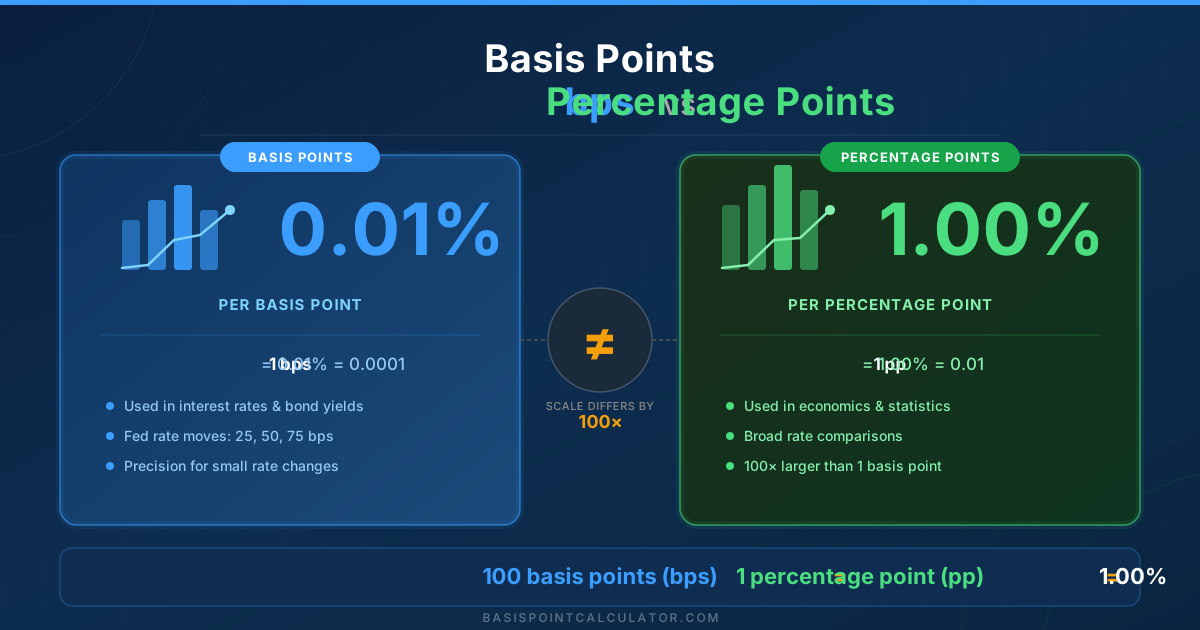
1 basis point (bps) = 0.01% = 0.0001
| Fee in BPS | Fee as Percentage | Common Context |
|---|---|---|
| 3 BPS | 0.03% | Ultra-low-cost index ETF |
| 10 BPS | 0.10% | Low-cost ETF |
| 40 BPS | 0.40% | Average equity mutual fund |
| 75 BPS | 0.75% | Financial advisor (mid-range) |
| 100 BPS | 1.00% | Financial advisor (standard) |
| 200 BPS | 2.00% | Hedge fund management fee |
The difference between 3 BPS and 200 BPS may sound small in isolation — but on a $500,000 portfolio over 30 years, it translates to a gap of over $600,000 in total wealth. That’s why every basis point matters.
ETF Expense Ratios in Basis Points
An expense ratio is the annual fee a fund charges as a percentage of your assets. It’s automatically deducted from the fund’s returns — you never write a check, which is exactly why many investors underestimate its impact.
Current ETF Fee Benchmarks (2025–2026)
According to Investment Company Institute data, as of 2025:
| ETF Category | Average Expense Ratio | In Basis Points |
|---|---|---|
| Index equity ETFs | 0.14% | 14 BPS |
| Index bond ETFs | 0.09% | 9 BPS |
| Active equity ETFs | 0.74% | 74 BPS |
| Active bond ETFs | ~0.48% | ~48 BPS |
Industry-wide, fees have fallen dramatically — index equity ETF expense ratios have declined by 33% over the past nine years, and index bond ETFs by 50%. The race to zero is real.
Provider Comparison
| Provider | Average Expense Ratio | In Basis Points |
|---|---|---|
| Vanguard (overall avg) | 0.06% | 6 BPS |
| Vanguard ETFs (average) | 0.04% | 4 BPS |
| Industry ETF average | 0.23% | 23 BPS |
| Fidelity ZERO funds | 0.00% | 0 BPS |
| Typical active fund | 0.87% | 87 BPS |
Vanguard’s average ETF charges just 4 basis points — compared to the industry ETF average of 23 basis points. On a $200,000 portfolio, that 19 BPS difference costs $380 per year before compounding effects.
Low-Cost vs High-Cost ETF Examples
| ETF Type | Typical BPS Range | Example Annual Fee on $100k |
|---|---|---|
| Plain vanilla index ETF | 3–15 BPS | $30–$150 |
| Sector/themed index ETF | 15–40 BPS | $150–$400 |
| Smart beta / factor ETF | 20–60 BPS | $200–$600 |
| Actively managed ETF | 50–100 BPS | $500–$1,000 |
| Leveraged/inverse ETF | 75–150 BPS | $750–$1,500 |
| Niche alternative strategy | 100–200 BPS | $1,000–$2,000 |
Key insight: “Plain vanilla” passive ETFs tracking broad indices (S&P 500, Total Market, Total Bond) consistently charge under 10 basis points. Any time you’re paying above 40 BPS for an ETF, the fund’s strategy should justify the premium.
Mutual Fund Expense Ratios in Basis Points
Mutual funds — particularly actively managed ones — have historically charged more than ETFs. Their fee structure is the same (expense ratio deducted from assets), but the averages are higher.
Current Mutual Fund Benchmarks (2025)
| Fund Type | Average Expense Ratio | In Basis Points |
|---|---|---|
| Index equity mutual funds | 0.40% | 40 BPS |
| Active equity mutual funds | 0.87% | 87 BPS |
| Index bond mutual funds | ~0.30% | ~30 BPS |
| Active bond mutual funds | ~0.65% | ~65 BPS |
From 1996 to 2025, average equity mutual fund expense ratios fell by 62% — driven almost entirely by investor migration toward index products and the competitive pressure ETFs created.
Index Mutual Fund vs Active Mutual Fund: Fee Comparison
A 47 BPS difference between an index fund (40 BPS) and an active fund (87 BPS) may seem modest. Here’s the dollar reality:
$200,000 invested, 7% gross annual return before fees:
| Fee Level | Annual Fee | 10-Year Value | 20-Year Value | 30-Year Value |
|---|---|---|---|---|
| 3 BPS (ultra-low ETF) | $60 → grows | $393,430 | $774,022 | $1,523,056 |
| 40 BPS (index mutual fund) | $800 → grows | $381,650 | $727,600 | $1,388,186 |
| 87 BPS (active mutual fund) | $1,740 → grows | $367,980 | $678,460 | $1,250,840 |
| 200 BPS (hedge fund mgmt) | $4,000 → grows | $340,960 | $582,550 | $994,750 |
The gap between a 3 BPS ETF and a 200 BPS management fee grows to over $528,000 over 30 years on the same $200,000 starting investment — purely from fees, assuming identical gross returns.
Financial Advisor Fees in Basis Points
Financial advisors who charge based on assets under management (AUM) quote their fees in basis points. The industry standard has historically been 100 BPS (1.00%) annually, but this is shifting downward.
Current AUM Fee Ranges (2026)
| Client Asset Level | Typical AUM Fee | In Basis Points |
|---|---|---|
| Under $500k | 1.00–1.25% | 100–125 BPS |
| $500k–$1.5M | 0.75–1.00% | 75–100 BPS |
| $1.5M–$5M | 0.50–0.75% | 50–75 BPS |
| $5M–$10M | 0.40–0.60% | 40–60 BPS |
| $10M+ | 0.30–0.50% | 30–50 BPS |
By 2026, analysts project that 83% of advisors will charge below 100 BPS for clients with more than $5 million in assets. For clients with $10 million or more, the average fee is expected to fall to 66 basis points.
What You Pay an Advisor Annually in Dollars
| Portfolio Size | Fee at 50 BPS | Fee at 75 BPS | Fee at 100 BPS |
|---|---|---|---|
| $250,000 | $1,250 | $1,875 | $2,500 |
| $500,000 | $2,500 | $3,750 | $5,000 |
| $1,000,000 | $5,000 | $7,500 | $10,000 |
| $2,000,000 | $10,000 | $15,000 | $20,000 |
| $5,000,000 | $25,000 | $37,500 | $50,000 |
The negotiation implication: A 25 BPS reduction in your advisor’s fee on a $1,000,000 portfolio saves $2,500 per year. Over 10 years with compounding, that difference can exceed $35,000. Basis points are not just financial jargon — they’re a negotiating unit.
Advisor Fee + Fund Fee = True All-In Cost
One mistake investors make is looking at the advisor fee or the fund expense ratio in isolation. The real cost is both combined:
| Scenario | Advisor Fee | Fund Expense Ratio | Total Annual Cost on $500k |
|---|---|---|---|
| DIY investor, low-cost ETFs | 0 BPS | 5 BPS | $250 |
| Robo-advisor | 25 BPS | 10 BPS | $1,750 |
| Full-service advisor, index funds | 75 BPS | 15 BPS | $4,500 |
| Full-service advisor, active funds | 100 BPS | 75 BPS | $8,750 |
| Advisor + expensive active funds | 100 BPS | 100 BPS | $10,000 |
The combination of a 100 BPS advisor fee and 100 BPS fund expense ratio produces a 200 BPS total drag — meaning your investments need to outperform a passive approach by 200 basis points every year just to break even on fees.
Hedge Fund Fees in Basis Points: The “2 and 20” Structure
Hedge funds traditionally charge the highest fees in the investment universe. The iconic “2 and 20” structure means:
- 2% management fee = 200 BPS on total assets, charged annually regardless of performance
- 20% performance fee on all profits above a set threshold (often 8% — called the “hurdle rate”)
2 and 20 in Action
Example: $1,000,000 invested in a hedge fund, 15% gross return
Management fee: $1,000,000 × 2% = $20,000 Gross profit: $150,000 Performance fee: $150,000 × 20% = $30,000 Total fees paid: $50,000 Net return to investor: $150,000 − $50,000 = $100,000 (10%)
The fund captured $50,000 on your $150,000 gain — over 33% of the profit. In basis points, the effective fee drag on a strong year is well over 300 BPS.
How Hedge Fund Fees Are Evolving
The 2 and 20 model has come under pressure. Current ranges in 2025:
| Fee Component | Traditional | Current Range | In Basis Points (Mgmt Only) |
|---|---|---|---|
| Management fee | 2.00% | 1.00–2.00% | 100–200 BPS |
| Performance fee | 20% of profits | 15–25% of profits | N/A |
| Hurdle rate | 8% | 6–10% | N/A |
Large institutional investors now routinely negotiate management fees down to 100–150 BPS. Smaller retail-accessible hedge-like vehicles often charge even less, while charging higher performance fees.
Hedge Fund vs Index ETF: The Cost of Sophistication
| Vehicle | Mgmt Fee (BPS) | Performance Fee | $1M Cost in a Flat Year |
|---|---|---|---|
| S&P 500 Index ETF | 3 BPS | None | $300 |
| Active mutual fund | 87 BPS | None | $8,700 |
| Hedge fund (traditional) | 200 BPS | 20% of profit | $20,000+ |
This is why hedge funds must generate significant alpha just to justify their fee structure. A fund charging 200 BPS must outperform a 3 BPS ETF by at least 197 BPS annually — before performance fees — to deliver the same net return.
Robo-Advisors and Digital Platforms
Robo-advisors introduced a new fee tier between DIY investing and full-service advice:
| Platform Type | Typical Fee Range | In Basis Points |
|---|---|---|
| DIY brokerage (no advice) | $0 | 0 BPS |
| Robo-advisor (basic) | 0.20–0.30% | 20–30 BPS |
| Robo-advisor (premium) | 0.30–0.50% | 30–50 BPS |
| Hybrid (robo + human) | 0.30–0.75% | 30–75 BPS |
| Full-service human advisor | 0.75–1.25% | 75–125 BPS |
Robo-advisors typically charge 25–30 BPS for their platform fee on top of the underlying ETF expense ratios (usually 5–15 BPS), giving an all-in cost of 30–45 BPS. That’s roughly one-third the cost of a traditional advisor while covering the core allocation and rebalancing needs.
How to Compare Investment Fees Using Basis Points
Step 1: Convert everything to BPS
If a product quotes a percentage fee, multiply by 100 to get BPS. If it quotes BPS, divide by 100 to get a percentage.
0.75% × 100 = 75 BPS 125 BPS ÷ 100 = 1.25%
Step 2: Find the total all-in cost
Add advisor fee BPS + fund expense ratio BPS + any platform fees.
Advisor: 75 BPS + ETF: 15 BPS + Platform: 5 BPS = 95 BPS total
Step 3: Calculate the annual dollar cost
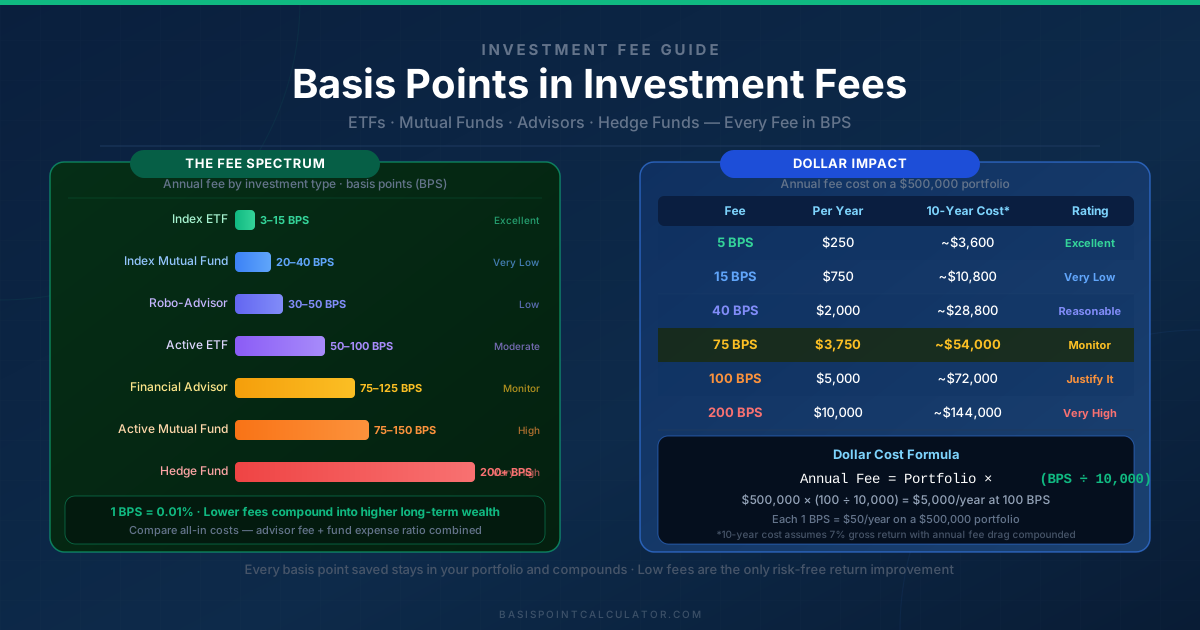
Annual Fee = Portfolio Value × (Total BPS ÷ 10,000)
Example: $400,000 portfolio at 95 BPS:
$400,000 × (95 ÷ 10,000) = $400,000 × 0.0095 = $3,800/year
Step 4: Project the 10-year cost
Annual fees are also subject to compounding — fees paid today can’t compound into future returns.
| Total Fee (BPS) | Annual Cost on $400k | 10-Year Cost (7% gross return) |
|---|---|---|
| 5 BPS | $200 | ~$2,900 |
| 40 BPS | $1,600 | ~$23,000 |
| 95 BPS | $3,800 | ~$55,000 |
| 150 BPS | $6,000 | ~$86,000 |
| 200 BPS | $8,000 | ~$115,000 |
Use our Basis Point Calculator to instantly find the dollar value of any BPS difference on your specific portfolio size.
Frequently Asked Questions
What does “50 basis points” mean as a fee?
50 basis points equals 0.50%. On a $200,000 portfolio, a 50 BPS annual fee costs $1,000 per year. Over 20 years with compounding, that fee reduces your ending portfolio by approximately $28,000–$35,000 compared to a zero-fee alternative (assuming 7% gross return).
What is a reasonable expense ratio in basis points?
For a broad-market index ETF, 3–15 BPS is excellent. For an index mutual fund, 20–40 BPS is reasonable. For an actively managed ETF or mutual fund, anything under 75 BPS is competitive. Above 100 BPS for a mutual fund warrants scrutiny unless the strategy is highly specialized.
Is a 100 basis point financial advisor fee worth it?
It depends entirely on what the advisor provides and whether their guidance adds more value than the fee. At 100 BPS, a full-service advisor on a $500,000 portfolio costs $5,000/year. If their planning (tax optimization, estate planning, behavioral coaching) saves or generates more than $5,000 annually, the fee is justified. Many advisors now offer the same services at 50–75 BPS.
What is the hedge fund “2 and 20” in basis points?
The 2% management fee equals 200 basis points. The 20% performance fee is not expressed in basis points — it’s a profit-sharing arrangement. Combined, the effective fee drag in a good year (say, 15% gross return) can exceed 300–400 basis points depending on how much profit is shared.
How do I calculate the dollar cost of an expense ratio?
Multiply your investment value by the expense ratio expressed as a decimal. For a $250,000 investment in a fund with a 0.40% (40 BPS) expense ratio: $250,000 × 0.0040 = $1,000 per year. The fee is deducted daily from the fund’s NAV, so you never see a bill — it simply reduces returns.
Do lower fees always mean better investments?
Not necessarily — but fees are certain, while returns are not. A high-fee fund must consistently outperform a low-fee alternative by at least the fee difference just to match returns. Decades of research show that most actively managed funds do not beat their index benchmarks net of fees over long periods. For most investors, minimizing fees in basis points while maintaining broad diversification is the most reliable path to better long-term outcomes.
What is “basis point value” for investment fees?
In the context of fees, basis point value means the dollar cost of 1 additional basis point per year on your portfolio. Formula: BPV = Portfolio Value ÷ 10,000. For a $500,000 portfolio: $500,000 ÷ 10,000 = $50 per basis point per year. This is a useful mental anchor when comparing fund options — each additional basis point in fees costs you exactly $50/year at that portfolio size.
What is Vanguard’s expense ratio in basis points?
As of 2026, Vanguard’s average ETF expense ratio is approximately 4 basis points (0.04%), and its overall fund average (including mutual funds) is around 6 basis points (0.06%). The industry average ETF expense ratio is approximately 23 basis points — nearly six times Vanguard’s figure.
Summary: Investment Fees by Vehicle Type
| Investment Vehicle | Typical Fee Range (BPS) | Relative Cost |
|---|---|---|
| Free index ETF (e.g., FNILX) | 0 BPS | Lowest |
| Ultra-low index ETF | 3–10 BPS | Very low |
| Standard index ETF | 10–20 BPS | Low |
| Index mutual fund | 20–50 BPS | Moderate |
| Robo-advisor (all-in) | 30–50 BPS | Moderate |
| Active ETF | 50–100 BPS | Moderate-high |
| Active mutual fund | 70–150 BPS | High |
| Full-service advisor (all-in) | 90–175 BPS | High |
| Hedge fund (management only) | 100–200 BPS | Very high |
| Hedge fund (management + performance) | 300–500+ BPS effective | Highest |
The bottom line: Investment fees measured in basis points follow a simple rule — every basis point you save is a basis point that stays in your portfolio and compounds. On large portfolios over long time horizons, optimizing fees is one of the few risk-free improvements any investor can make. Know what you’re paying in BPS, understand what you’re getting for it, and compare every alternative.
Disclaimer: This article is for educational purposes only and does not constitute financial or investment advice. Fee ranges cited reflect industry data as of 2025–2026 and are subject to change. Always verify current fees directly with any fund, advisor, or platform before making investment decisions. Consult a qualified financial professional before making changes to your investment strategy.