Why Use Basis Points?
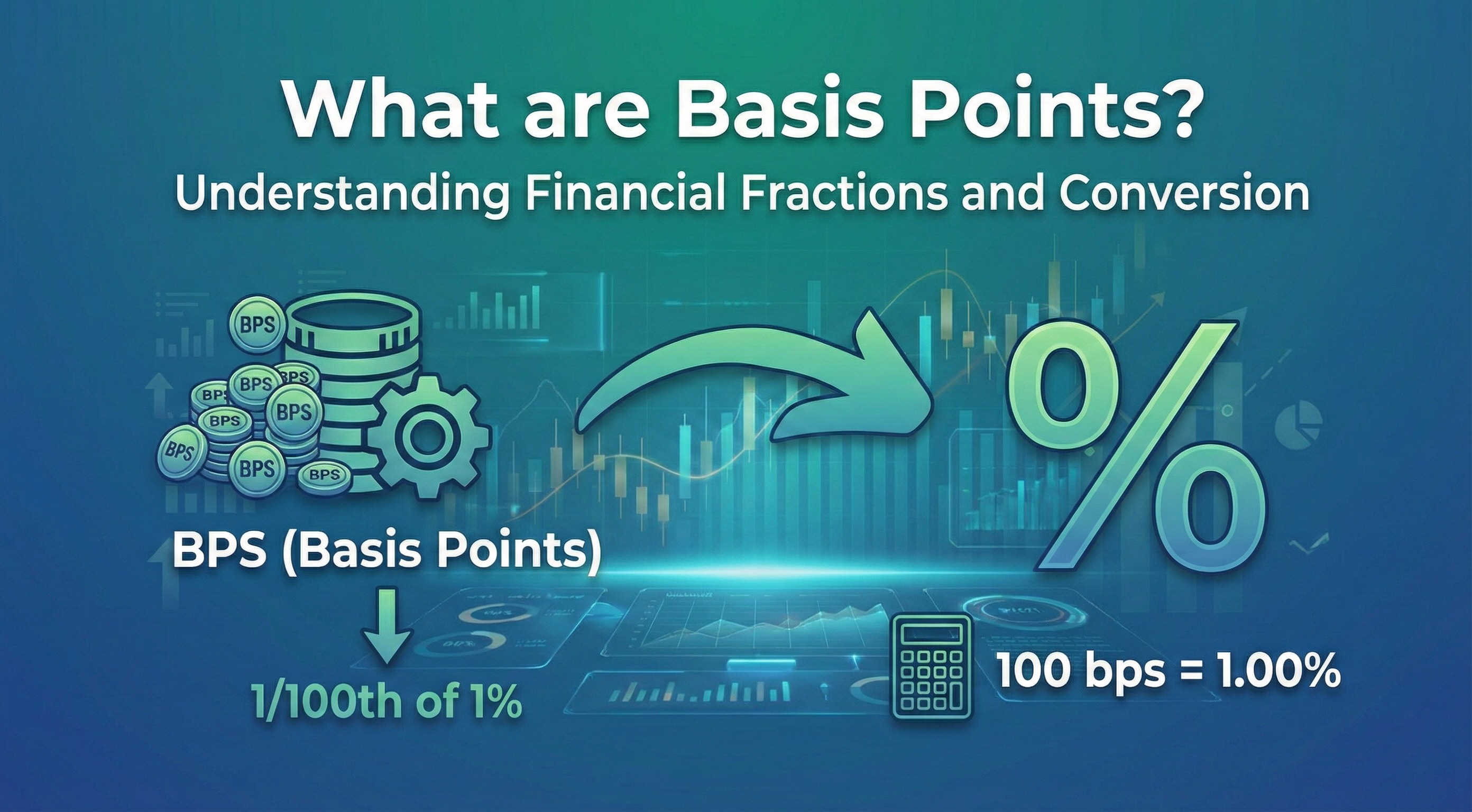
Financial professionals use basis points instead of percentages to avoid confusion when discussing rate changes. When interest rates are already expressed as percentages, saying “rates increased by 0.50%” is ambiguous—is it a relative or absolute change?
Example of Ambiguity: If interest rates rise from 4% to 4.5%, this is a 0.5 percentage point increase (50 basis points), but a 12.5% relative increase. Using “basis points” clarifies the absolute change.
Common Basis Point Values
| Basis Points | Percentage | Decimal | Common Usage |
|---|---|---|---|
| 1 bps | 0.01% | 0.0001 | Fine-tuning, small adjustments |
| 10 bps | 0.10% | 0.0010 | Minor policy changes |
| 25 bps | 0.25% | 0.0025 | Standard Fed rate change |
| 50 bps | 0.50% | 0.0050 | Significant rate move |
| 100 bps | 1.00% | 0.0100 | Major policy shift |
Where Basis Points are Used
- Central Bank Policy: Federal Reserve rate decisions are announced in basis points
- Bond Markets: Yield spreads and changes are quoted in bps
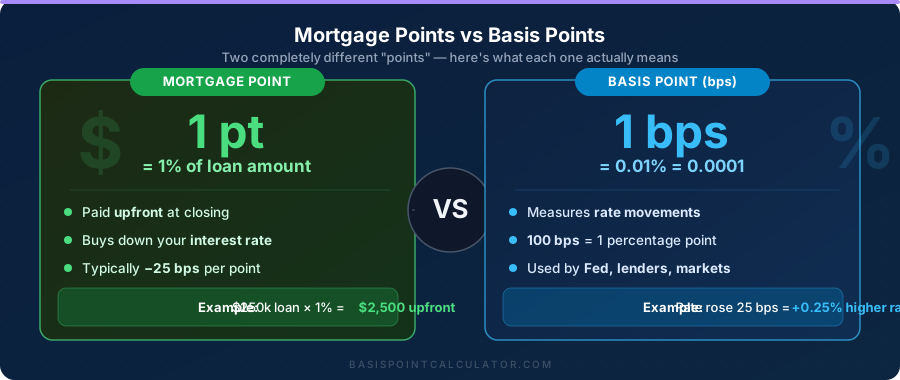
- Mortgages: Loan rate differences are often discussed in basis points
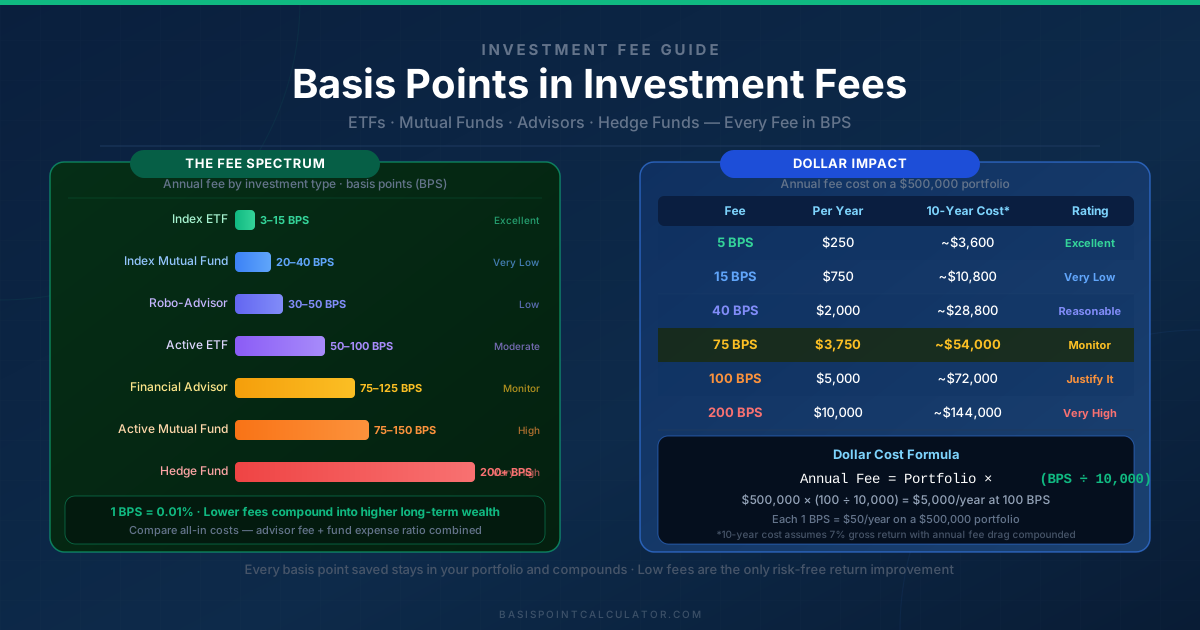
- Investment Fees: Expense ratios are sometimes quoted in basis points
- Credit Markets: Credit spreads and risk premiums use basis points
How to Convert Basis Points
BPS to Percentage: Percentage = Basis Points ÷ 100
- Example: 75 bps = 75 ÷ 100 = 0.75%
Percentage to BPS: Basis Points = Percentage × 100
- Example: 2.5% = 2.5 × 100 = 250 bps
Real-World Impact
Even small basis point changes can have significant effects on large sums of money. On a $300,000 mortgage, a 25 basis point increase in rate can cost an additional $40+ per month, or nearly $15,000 over a 30-year term.