Quick Answer: 25 basis points = 0.25%. 50 basis points = 0.50%. On a $400,000 mortgage, a 25 bps rate hike adds roughly $58/month and over $20,000 in total interest. A 50 bps hike nearly doubles that impact.
Every time the Federal Reserve meets, financial headlines flood with phrases like “the Fed raised rates by 25 basis points” or “a 50 bps hike is expected.” Most people nod along — but what do those basis points actually mean in your bank account? This guide breaks it down with real numbers.
What Are 25 Basis Points and 50 Basis Points?
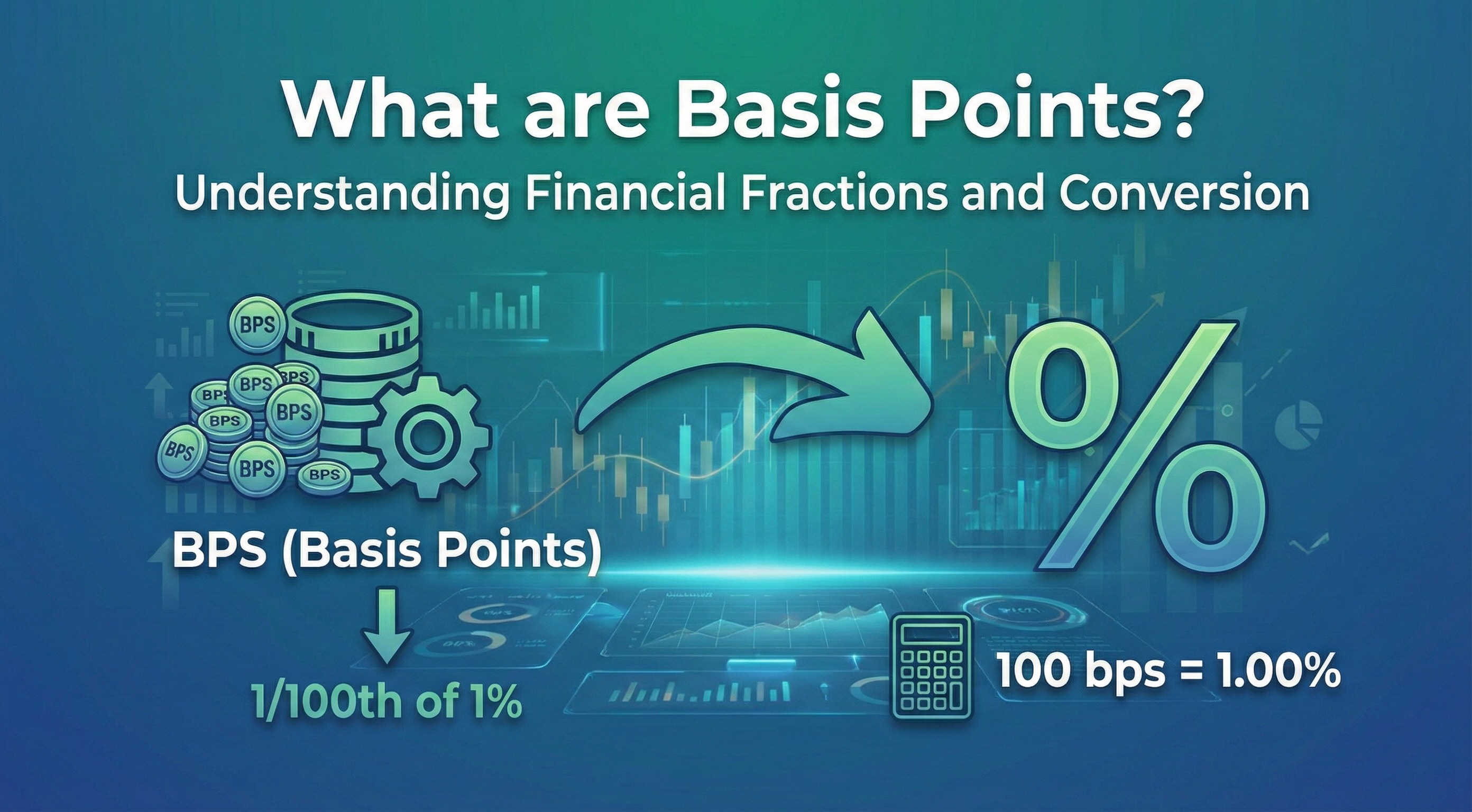
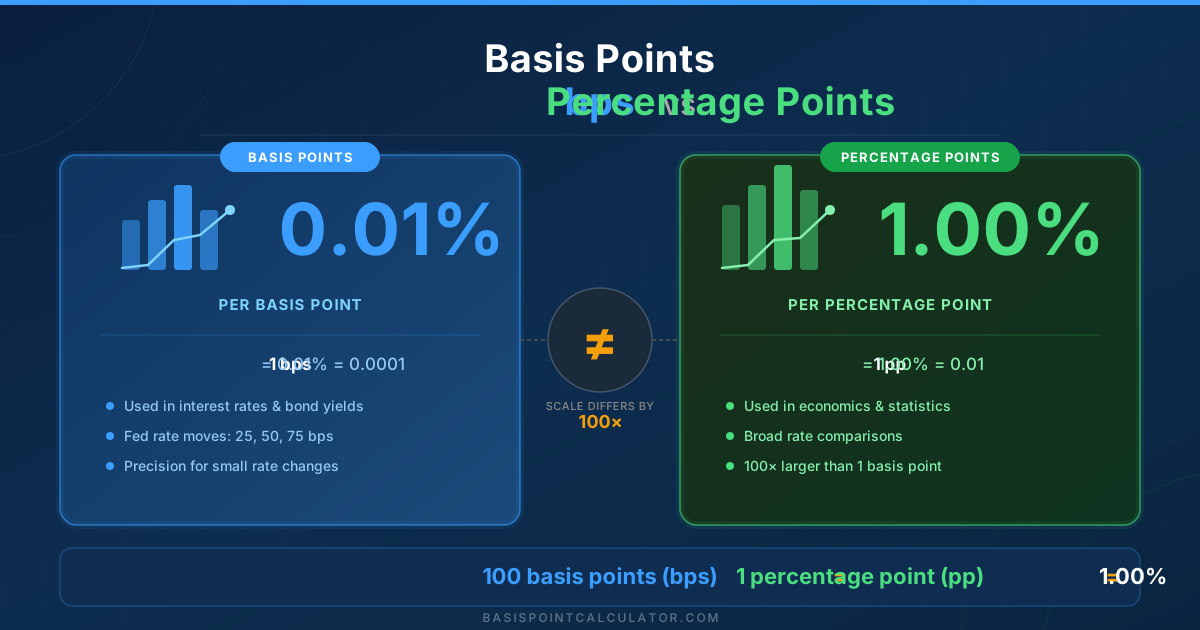
A basis point (bps) is one hundredth of a percentage point — so 1 basis point = 0.01%. This unit exists because financial markets move in very small increments, and saying “0.25 percentage points” is more error-prone than saying “25 basis points.”
| Rate Move | Basis Points | Percentage | Fed Nickname |
|---|---|---|---|
| Quarter-point move | 25 bps | 0.25% | Standard hike/cut |
| Half-point move | 50 bps | 0.50% | Significant move |
| Three-quarter point move | 75 bps | 0.75% | Aggressive (rare) |
| Full point move | 100 bps | 1.00% | Emergency or crisis |
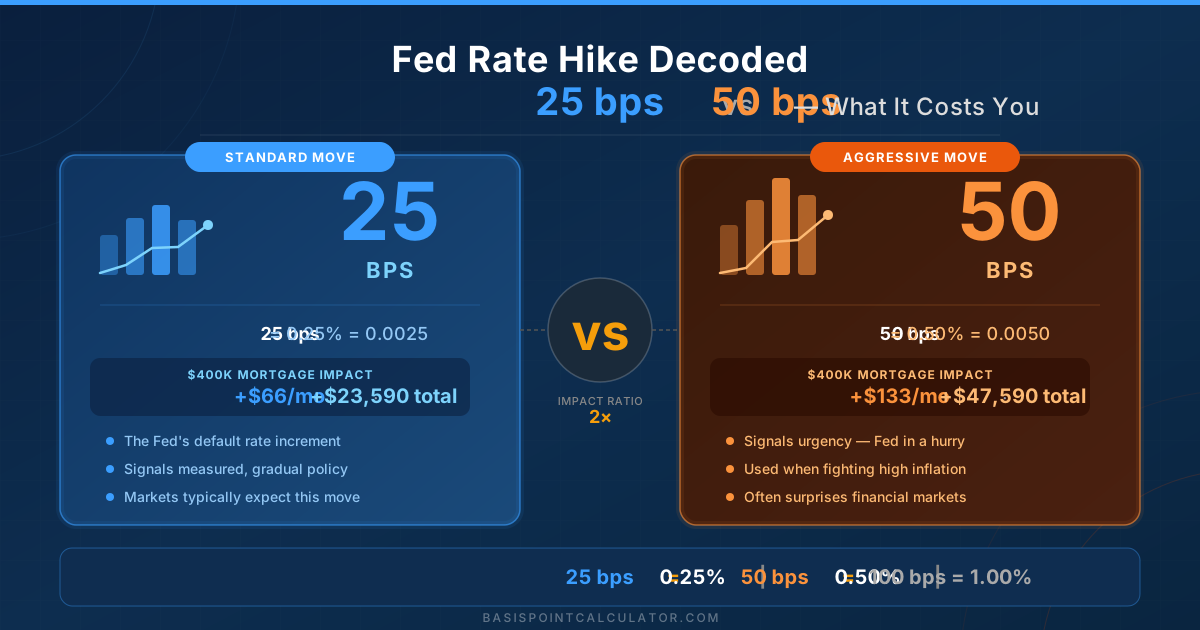
Why 25 bps is the default increment: The Federal Reserve almost always moves in 25 basis point steps — it signals control and predictability. A 50 bps move sends a stronger message: the Fed is in a hurry. A 75 bps move (as seen in 2022) is rare and reserved for fighting runaway inflation.
Impact on Your Mortgage: 25 bps vs 50 bps
This is where basis points stop being abstract and start hitting your wallet. The table below shows the monthly payment and total interest on a $400,000 30-year fixed mortgage at various rate levels.
| Interest Rate | Monthly Payment | Total Interest (30 yr) | vs 6.50% baseline |
|---|---|---|---|
| 6.50% (baseline) | $2,528 | $510,177 | — |
| 6.75% (+25 bps) | $2,594 | $533,767 | +$23,590 |
| 7.00% (+50 bps) | $2,661 | $557,767 | +$47,590 |
| 7.25% (+75 bps) | $2,729 | $582,267 | +$72,090 |
| 7.50% (+100 bps) | $2,797 | $607,106 | +$96,929 |
Key Insight: A single 25 bps rate hike adds $66/month and nearly $24,000 in total interest on a $400,000 mortgage. A 50 bps hike doubles that to $133/month more and almost $48,000 extra over the life of the loan.
Impact on Other Loans and Products
Mortgage rates get the headlines, but basis point changes ripple through nearly every financial product you use.
- Auto Loans: On a $35,000 5-year auto loan, a 25 bps rate hike costs about $4/month extra — roughly $240 over the loan term. A 50 bps hike doubles that to ~$480 extra total.
- Personal Loans: A $20,000 personal loan at 3 years sees about $3–5/month increase per 25 bps. The impact is modest here because of the short term and smaller balance.
- HELOCs & Variable Rate Loans: These adjust immediately after a Fed rate move. Variable-rate borrowers feel every 25 bps hike in their very next statement — there is no fixed-rate buffer.
- High-Yield Savings & CDs: Rate hikes work in your favor here. A 50 bps Fed hike often means savings accounts and CDs offer 25–50 bps more APY, putting more money in your pocket.
25 bps vs 50 bps: Which Is Bigger News?
The Federal Reserve communicates through the size of its rate decisions. The basis point increment carries meaning beyond the raw number.
25 bps (Quarter-point move):
- The Fed’s default, cautious pace
- Signals measured, gradual action
- Markets usually expect this
- Less shock to borrowing costs
50 bps (Half-point move):
- Used when the Fed needs to move fast
- Signals urgency — fighting inflation or recession risk
- Often surprises markets
- Mortgage and loan rates jump sharply
How Rate Hikes Flow From the Fed to Your Bank
The Federal Reserve sets the federal funds rate — the rate banks charge each other for overnight loans. This isn’t your mortgage rate directly, but it’s the anchor everything else floats from.
- Fed raises rates by 25 or 50 bps — announced at FOMC meetings (8 per year)
- Prime rate rises — most banks immediately adjust (Prime = Fed rate + 3%)
- Variable-rate products adjust immediately — HELOCs, credit cards, ARMs
- Fixed mortgage rates follow bond markets — the 10-year Treasury yield is the key driver, not the Fed rate directly
Important distinction: Fixed 30-year mortgage rates don’t move in lockstep with the Fed. They track the 10-year Treasury yield. Sometimes mortgage rates rise before the Fed acts (markets price it in) and sometimes they fall even as the Fed holds rates steady.
Basis Points and Your Savings: The Other Side
While borrowers pay more when basis points go up, savers benefit. Here’s what 25 bps and 50 bps mean for a $50,000 savings balance over one year:
| APY | Annual Earnings ($50k) | vs 4.50% baseline |
|---|---|---|
| 4.50% (baseline) | $2,250 | — |
| 4.75% (+25 bps) | $2,375 | +$125/year |
| 5.00% (+50 bps) | $2,500 | +$250/year |
| 5.25% (+75 bps) | $2,625 | +$375/year |
Frequently Asked Questions
Is 25 bps a big deal? In isolation, 25 basis points looks small — it’s just 0.25%. But on a large loan or over a long time horizon, it translates to thousands of dollars. On a $400,000 30-year mortgage, 25 bps costs over $23,000 in extra interest. And when the Fed delivers multiple 25 bps hikes in a row (as in 2022–2023), the cumulative effect is enormous.
Why does the Fed use 25 bps increments? Using a fixed, small increment allows the Fed to adjust policy precisely and predictably. A 25 bps step says “we’re adjusting gradually.” A 50 bps step says “we need to move faster.” Increments also make forward guidance easier — saying “we expect two more 25 bps hikes” is clearer than discussing fractions of a percent.
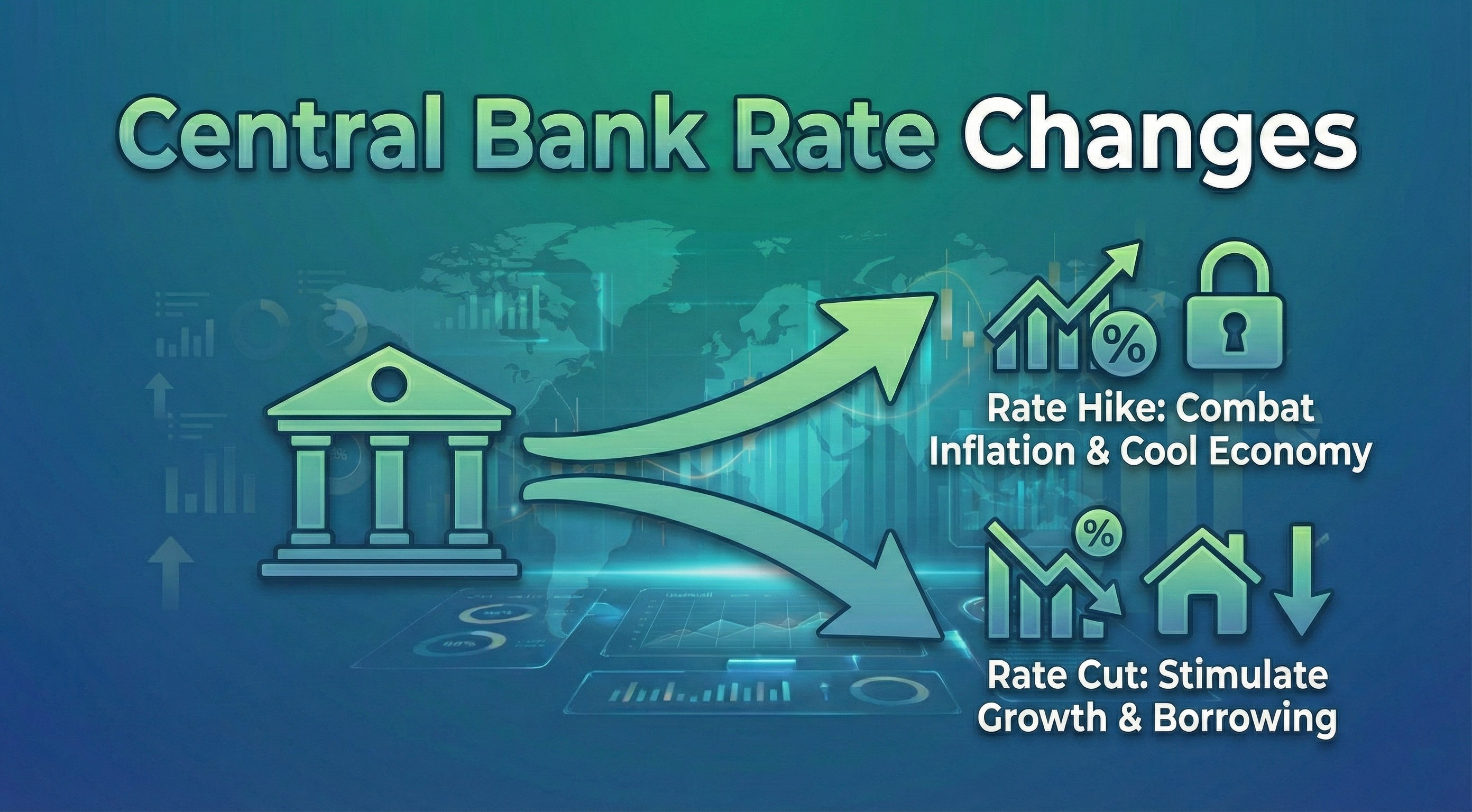
Do rate cuts also happen in 25 or 50 bps steps? Yes — the same increments apply to cuts. A 25 bps rate cut lowers the federal funds rate by 0.25%. A 50 bps cut (sometimes called an “emergency cut”) signals the Fed is acting urgently to stimulate the economy, as seen in early 2020 during COVID-19.
Does a 50 bps hike mean my mortgage rate goes up 0.50%? Not immediately, and not exactly. If you have a fixed-rate mortgage, your rate doesn’t change at all — it’s locked in. If you have a variable-rate loan or HELOC, your rate often adjusts within one billing cycle. New fixed mortgage rates will generally rise as lenders reprice, but the movement follows Treasury bond markets more than the Fed directly.