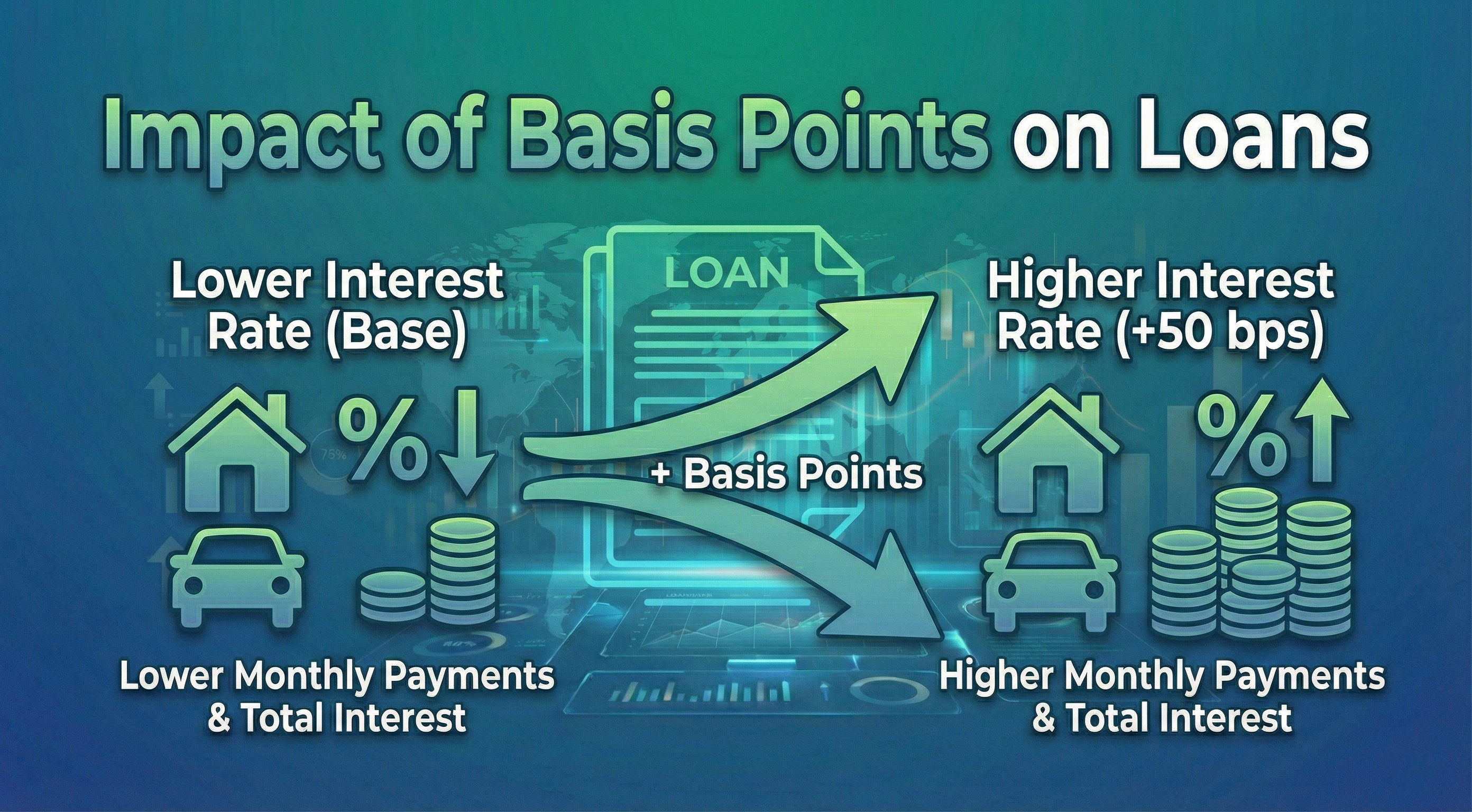
The Bottom Line: A seemingly small 25 basis point (0.25%) rate difference can cost you tens of thousands of dollars over the life of a mortgage. Always shop rates carefully!
Real Dollar Impact
Let’s look at how different rate changes affect a $300,000, 30-year mortgage:
| Interest Rate | Monthly Payment | Total Interest | vs 6.00% (extra cost) |
|---|---|---|---|
| 6.00% | $1,799 | $347,515 | Baseline |
| 6.25% (+25 bps) | $1,847 | $364,820 | +$17,305 |
| 6.50% (+50 bps) | $1,896 | $382,633 | +$35,118 |
| 6.75% (+75 bps) | $1,946 | $400,934 | +$53,419 |
| 7.00% (+100 bps) | $1,996 | $419,705 | +$72,190 |
Key Insight: Just 100 basis points (1%) higher rate costs an extra $72,190 in interest and adds nearly $200/month to your payment on a $300,000 loan.
Impact on Different Loan Types
- Mortgages: Long terms amplify the impact. 25 bps on a 30-year mortgage affects payment for decades.
- Auto Loans: Shorter terms reduce total impact, but 50 bps still means hundreds in extra interest.
- Credit Cards: High rates mean basis point changes are proportionally smaller but still significant on large balances.
- Student Loans: Extended repayment terms can make rate differences add up substantially.
Strategies to Get Lower Rates
- Improve credit score: 50 points can save 25-50 bps
- Shop multiple lenders: Rates can vary by 50+ bps between lenders
- Larger down payment: Lower loan-to-value often means lower rates
- Pay for points: Each point (1% of loan) typically lowers rate by 25 bps
- Shorter term: 15-year mortgages usually have lower rates than 30-year
When Basis Points Matter Most
Focus on rate shopping when:
- Large Loans: $250,000+
- Long Terms: 15+ years
- Variable Rates: Can change over time